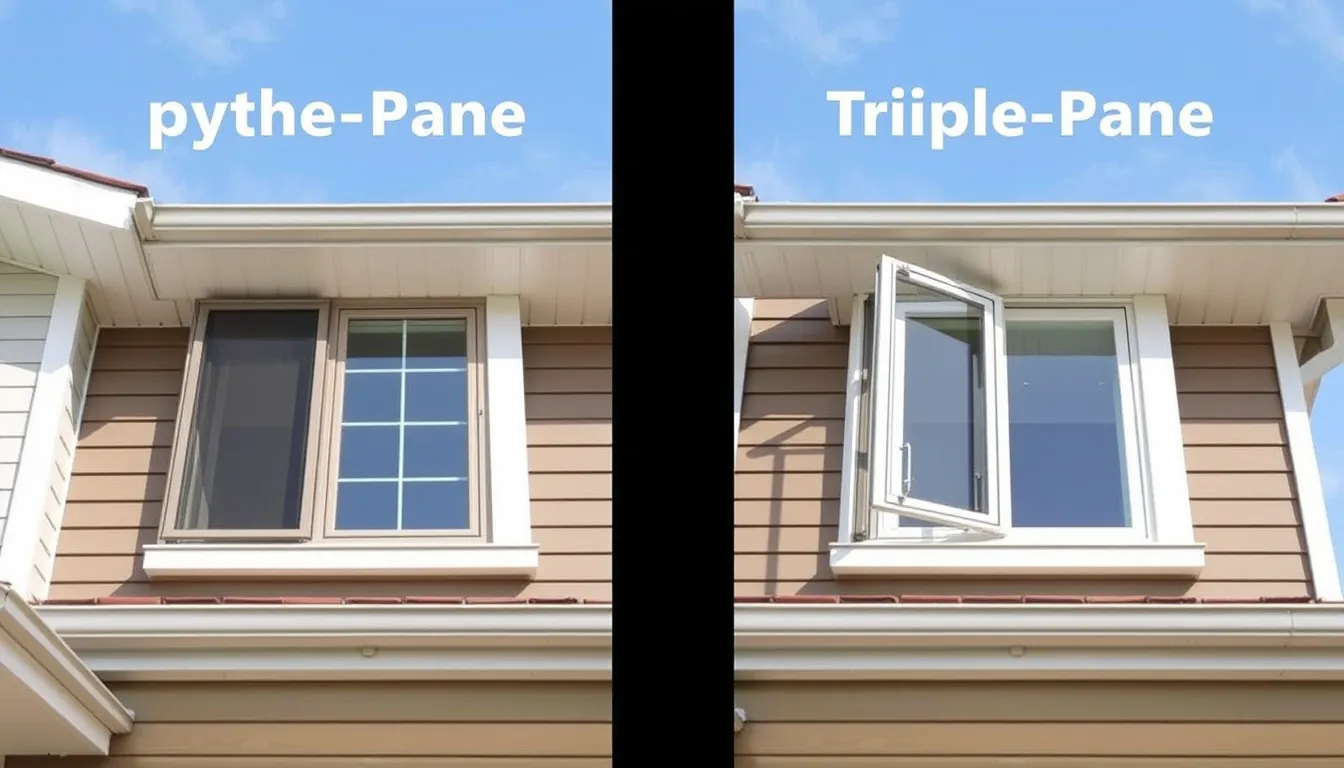
If you’re renovating, building a new home, or replacing a few frames, choosing between double‑pane and triple‑pane windows can feel overwhelming. This Double-Pane vs. Triple-Pane Windows Explained guide walks you through real‑world performance so you can see how U‑
Understanding Window Glazing: How Double and Triple Panes Work
…U‑factor is the key metric that tells you how much heat leaks through the window assembly. A double‑pane unit consists of two sheets of glass separated by a spacer that holds a thin, sealed cavity filled with an inert gas—usually argon or, for higher performance, krypton. The gas slows conductive heat flow because its thermal conductivity is lower than air. A low‑E (low‑emissivity) coating, applied to one side of the inner pane, reflects infrared radiation back into the interior, further reducing the U‑factor while still allowing visible light to pass.
Triple‑pane windows add a third sheet of glass and a second gas‑filled cavity, effectively doubling the barrier against conduction and convection. The additional pane also creates another low‑E surface, which can bring the overall U‑factor down noticeably. Because there are three layers, the thermal break provided by the spacer becomes even more critical; modern frames use insulated separators to prevent heat bridges that would otherwise raise the R‑value.
Both designs also influence the Solar Heat Gain Coefficient (SHGC). The low‑E coatings and gas fills limit the amount of solar infrared that enters, helping keep cooling loads in hot climates while still admitting daylight.
Energy Performance: Insulation and Heat Transfer
Because a triple‑pane unit adds a second gas‑filled cavity and an extra sheet of glass, its overall thermal resistance (R‑value) is higher, which translates to a lower U‑factor than a comparable double‑pane. In practice the extra pane reduces conductive heat flow by roughly a third, so the window lets noticeably less heat escape in winter and less cold enter in summer.
Each pane also presents an additional low‑E coating surface. The extra coating, together with the second gas layer (often krypton for better performance), marginally lowers the Solar Heat Gain Coefficient. The result is a modest reduction in solar‑induced heat gain, which can be valuable in hot climates but is less critical where cooling loads dominate.
Climate zone determines which metric matters most. In cold‑climate zones the primary gain comes from the reduced U‑factor, because retaining indoor heat is the biggest energy driver. In warm‑climate zones the SHGC becomes more important, and the incremental SHGC improvement of a triple‑pane may not outweigh the higher cost. In mixed‑climate regions, homeowners should weigh the modest U‑factor benefit against the modest SHGC gain to decide if the added pane justifies the expense.
Comfort and Noise Reduction
While U‑factor and SHGC dominate the energy conversation, the extra pane also smooths daily comfort. A triple‑pane assembly keeps the interior glass surface warmer in winter and cooler in summer, so the temperature swing you feel near a window is less pronounced. That higher interior glass temperature means the pane is less likely to dip below the indoor dew point, which cuts the frequency of condensation on the interior side—a common nuisance in humid climates.
Sound transmission benefits from the same principle. Each layer of glass and the intervening gas fill act as a barrier that disrupts sound waves. In practice, a well‑installed double‑pane window can lower outdoor noise by roughly 20‑30 dB, making street traffic sound more like a murmur. Adding a third pane typically adds another 5‑10 dB of attenuation, enough for many homeowners to notice a clearer, quieter living room, especially in homes near busy roads or airports.
Because the extra pane also adds a bit more mass, the overall R‑value of the window rises modestly, contributing to a feeling of steadier indoor temperature and quieter spaces without changing the Low‑E coating or thermal‑break design.
Cost, Payback, and Environmental Impact
Triple‑pane windows typically require a larger initial investment because the extra glass, additional gas fill (often krypton), and more complex sealants increase material and labor costs. Homeowners can evaluate whether that expense makes sense by estimating a payback period: the time it takes for reduced heating and cooling loads—driven by a lower U‑factor and often a modestly improved SHGC—to offset the upfront price through lower utility bills.
The calculation depends on climate severity, the home’s existing envelope, and usage patterns. In colder regions, the energy savings per year are greater, shortening the payback; in milder zones the return may extend beyond the typical lifespan of the window.
Beyond direct costs, triple‑pane units have a larger embodied carbon footprint because of the extra glass, frame material, and gas. However, the longer service life and reduced operational emissions can lower the total lifecycle impact compared with replacing double‑pane windows more frequently. Considering both financial and environmental dimensions helps homeowners decide if the higher upfront outlay aligns with their long‑term goals.
Installation, Frame Compatibility, and Maintenance
When swapping in double‑pane or triple‑pane units, the frame material dictates how the glazing performs and how easy the job will be. Wood frames provide a natural thermal break but require precise cutouts and a high‑quality sealant to prevent moisture ingress; they also need periodic painting or staining. Vinyl frames are dimensionally stable, so the spacer depth of a triple‑pane unit fits more predictably, but the interior cavity must be fully filled with the correct gas (argon or krypton) before the seal is compressed. Aluminum frames conduct heat, so a thermal break is essential—most modern aluminum windows incorporate an insulated spacer that allows triple‑pane glass without excessive condensation.
Proper sealing is critical for both pane types. A continuous, factory‑applied sealant around the perimeter, combined with a correctly sized spacer, preserves the U‑factor and SHGC ratings. In retrofits, existing jambs may be too narrow for triple‑pane units, requiring jamb extensions or new nailing flanges, which adds labor.
- Check that the frame’s rebate depth matches the glass thickness.
- Verify that the spacer material is compatible with the chosen gas fill.
- Inspect seals for gaps after installation; reseal any imperfections promptly.
Maintenance differs only slightly: double‑pane windows are easier to clean because the thinner glass is lighter and less prone to bowing. Triple‑pane units should be cleaned with a soft cloth and mild detergent; avoid high‑pressure water that could stress the larger pane. Any seal failure—visible as fogging between panes—requires professional replacement, regardless of frame type.
Decision Framework: Matching Glazing to Your Home and Priorities
Now that you know how double‑pane and triple‑pane windows differ in performance and upkeep, apply a simple decision framework to see which glazing aligns with your home’s needs.
- Climate zone. In cold‑climate regions, the extra insulating layer of a triple‑pane unit (lower U‑factor, higher R‑value) can noticeably reduce heating loads. In milder zones, a high‑performance double‑pane with Low‑E coating and argon fill often provides sufficient protection.
- Budget constraints. Triple‑pane windows carry a higher upfront cost. Estimate how much you can invest now versus the expected energy savings over the window’s life.
- Comfort priorities. If you’re sensitive to drafts or want more consistent indoor temperatures, the tighter thermal envelope of triple‑pane glazing may be worth the expense.
- Noise considerations. Triple‑pane glass adds mass and can dampen outdoor sound more effectively, making it a good choice for homes near busy streets or airports.
- Resale value. In markets where energy efficiency is a selling point, triple‑pane windows can boost appeal, but in areas where buyers expect standard double‑pane construction, the extra cost may not translate into higher offers.
Match each factor to your situation, weigh the trade‑offs, and you’ll have a clear picture of whether double‑pane or triple‑pane windows best serve your home.
Frequently Asked Questions About Double‑Pane vs. Triple‑Pane Windows
FAQs on Durability, Value, and Verification
Are triple‑pane windows more fragile? No. The extra glass does not make them significantly more breakable, though their greater weight requires proper frame support. Both types rely on argon or krypton gas fills and Low‑E coatings for performance, which degrade only if the seal fails. Triple‑pane units generally offer slightly better insulation due to the additional barrier, but the difference in daily durability is negligible for standard residential use.
Do they boost resale value? In colder climates or regions prioritizing energy efficiency, upgraded glazing can be a positive selling point. However, in markets where double‑pane windows are standard, the added cost may not yield a proportional return. Verify performance by checking the National Fenestration Rating Council (NFRC) label on the unit. Look specifically for the U‑factor and Solar Heat Gain Coefficient (SHGC) to ensure the product matches your climate’s needs, rather than relying on marketing claims alone.